Sunday, 30 April 2017

Jeep Brand Might Be Sold By Parent Automaker Fiat Chrysler Automobiles

In what could be a huge disruption for the Jeep brand in India and across the world, Fiat Chrysler Automobiles Chief Executive Sergio Marchionne recently admitted that the group was considering selling off the Jeep and Ram brands. The comment was made at a press conference call, which was held to discuss the FCA financial earnings from the first quarter of 2017 which have been much better than originally anticipated. When asked if FCA would consider selling Jeep and Ram by a representative of the Press, Marchionne answered in one word 'Yes'. Surprisingly, this comment comes at a time when Jeep is one of FCA's crown jewels and is driving the growth both financially and in terms of brand new models.

Jeep, the first automaker to really explore the lucrative SUV segment with the launch of the original Jeep Wagoneer and then with the Cherokee and Grand Cherokee decades ago and is the only real part of FCA that has been constantly bringing new and updated UVs to the market that have a global appeal. In India, Jeep has invested ₹ 1800 Crore at the Fiat factory in Ranjangaon in order to accommodate production of the Jeep Compass. The Indian factory will not just be used to meet demands for the Indian market, which is always SUV hungry, but also be used as a hub for all right hand drive markets around the world including the United Kingdom, South Africa, South East Asia, Japan and Australia.


If sold, FCA would be only left with Dodge and Chrysler in the United States. Coincidentally, neither Dodge nor Chrysler have a SUV in their ranks, a segment that accounts for more than 40% of the American car market. Similarly, Ram, which was made into a new brand altogether after being split from the Dodge group is the only mass-market pickup truck maker in the FCA family and that is another huge hunk of the American car market.

Skoda Kodiaq Bookings Officially Open in india

The new Skoda Kodiaq will be launched in India around Diwali and will be a very important product for Skoda to take on the likes of the Toyota Fortuner and the Ford Endeavour amongst others. Skoda India have officially listed the Kodiaq on their website and dealers have officially started taking bookings for the same. The booking amount for the Skoda Kodiaq is Rs 20,000 and dealers expect a late October or early November delivery schedule. Dealers have also confirmed that the new Skoda Kodiaq will be available with both the petrol and the diesel engines when launched later this year. The SUV is even currently undergoing testing in India.

 The Skoda Kodiaq will also get all-wheel-drive and the 7-speed DSG automatic gearbox as standard across all variants with the petrol and diesel engine. The petrol engine, a 2.0 litre, 4-cylinder turbocharged unit will make 177 bhp of peak power and 320 Nm of peak torque. The diesel engine will be available in two states of tune. The 2.0 litre diesel, 4-cylinder turbocharged unit will make either 147 bhp and 340 Nm or 187 bhp and 400 Nm of peak power and torque giving it enough grunt to take on its competition from Toyota and Ford.

skoda kodiaq first drive
Skoda Kodiaq is likely to be launched around Diwali

The Skoda Kodiaq is based on the same MQB platform that underpins the likes of the upcoming Volkswagen Tiguan. The difference though is the fact that the Kodiaq is a seven-seater SUV while the Tiguan will only get a five-seater configuration. The large and roomy cabin is well appointed but the real appeal of the Kodiaq will be its brawny styling that gives it great road presence and unique design that although not pretty in the conventional sense, is quite appealing to most.
Source

Sunday, 23 April 2017

BMW 5-series long-wheelbase revealed


The long-wheelbase BMW 5-series Li has been revealed at the Shanghai motor show, ahead of its China-only sales debut. The wheelbase of the new 5-series is stretched by 133mm for the China-only model, taking the overall length to 5,069mm, which is just 29mm shy of the length of the standard-wheelbase BMW 7-series.
 Built in collaboration with BMW’s Chinese partner carmaker Brilliance, BMW claims that the new model is 130kg lighter than its predecessor. The 5-series Li is expected to weigh around 1,610kg, while the standard 5-series ranges from 1,540kg to 1,660kg, depending on the specification. The extended-wheelbase 7-series adds 40kg on to the standard car’s kerb weight.
The 5-series Li also gets improved soundproofing, electrically-adjustable seats and a panoramic glass roof, along with extra knee room. A touchscreen mounted on the central armrest is the most notable feature at the back, along with a storage box.
The 5-series Li's engine line-up is expected to be two 2.0-litre four-cylinder petrol engines and one 3.0-litre six-cylinder – the same line-up as its predecessor, whose engines ranged from 207-310hp. It’ll be built, like the previous model, at BMW’s plant in Shenyang, China. BMW also offers a stretched X1 small SUV, the X1 Li, for the Chinese market.

2017 Kawasaki Z1000, Z1000R and Z250 launched


After bombarding us with four bikes – the Z900, the Z650, the new Ninja 650, and the 2017 Ninja 300 – Kawasaki has more in store for India. Its latest offerings come in the form of the 2017 Z250 (Rs 3.09 lakh), the Z1000 (Rs 14.39 lakh), and its sportier Z1000R (Rs 15.49 lakh) variant. All prices are ex-showroom, Delhi.

The key mechanical change on the Z1000 is that it is now BS-IV compliant. What’s nice is that the upgrade has not resulted in drop in either power or torque. This means that the Z1000 still continues to be powered by a 1,043cc, four-cylinder engine and churns out 142hp and an impressive 111Nm of torque. Furthermore, Kawasaki claims that the bike’s ECU has been recalibrated for smoother power delivery. Also new on the 2017 Z1000 are the indicators for gear position and gear up-shifts.

New to kawasaki’s line-up is the Z1000R, which is a sportier avatar of Kawasaki’s range-topping naked. This version of the litre-class Z uses the same engine as the Z1000, but comes with a few extra goodies. These include special front brake discs designed for better heat dissipation that are clamped down by M50 monobloc callipers by Brembo, and a new Ohlins rear monoshock. It also comes with a dedicated body graphics package.

The Japanese bikemaker has also silently upgraded its baby naked, the Z250, for BS-IV compliance. Like its bigger sibling, the Z-range starter sees no dip in outputs of 32hp and 21Nm that the 2016 bike made from its 249cc, parallel twin.

The Z1000 takes on bikes like the Honda CB1000R, while the smaller Z250 rivals the likes of the Benelli TNT 25 and the recently launched  KTM Duke 250.

Sunday, 9 April 2017

Watch: Sachin Tendulkar Requests Motorcyclists To Wear Helmets

With one of the largest number of accidents accounted every year globally, India has a questionable road safety record. Despite several road safety and awareness campaigns in play, people find it difficult to follow basic safety rules like wearing a seatbelt or a helmet. The lack of which is the major reason for most car or motorcycle related injuries. Cricketing legend and avid car enthusiast Sachin Tendulkar is the latest to have noticed this lack of discipline and recently took it upon himself to spread the word.

In a video posted by Sachin Tendulkar on Twitter, the former Indian cricketer can be seen asking two boys that were following his car in a scooter in a chance to grab a selfie. While the boys did exactly that, the lack of a helmet on either the rider or pillion prompted Sachin to ask them to wear one. The video was uploaded with the caption, 'Road safety be the highest priority for everyone. Please don't ride without a helmet.'

In the video, Sachin asks, "Promise me one thing, the next time you will use a helmet. It is dangerous for you like this. Life is precious. Is that a promise? 100 percent?" The boys do promise it, but after getting a selfie with the Master Blaster. Not only the boys, but Sachin also urged another rider to wear a helmet as he tried to catch a glimpse of the legend.
According to the World Health Organisation, motorcyclists without a helmet are 40 per cent more likely to die from a head injury. In 2015, the government recorded over 5 lakh road accidents across India, which equates to nearly 400 accidents every day, which is an alarming number by global standards. That statistic alone should be enough to urge you to buy a safe helmet. But a huge number of riders do not follow the rule, which is disappointing. Hopefully, words from the God of cricket will help prevail some sense in a number of riders.


Why The Shift To BS 6 Emission Norms Could Be Very Thorny

The drama we witnessed in the last two weeks of March over the transition to BS IV or Bharat Stage Four emission norms across India was quite remarkable. And within that we also have a very clear message. That the judiciary is going to step in to ensure government, and also industry for that matter - is mindful and acts on the pollution problem plaguing our country. But first lets look at the April 1 2017 deadline for the complete nationwide transition to BS IV. You would recall that India's auto industry had petitioned the court to accept its version of the interpretation of the government order - that mandated the shift. The industry said the order implied that only BS IV vehicles would be manufactured from the said date, while sales of BS III stocks may continue. But as far back as September 2016, the EPCA (Environment Pollution Control Authority) had warned that the order was meant to see a complete stop of all BS III vehicles by then - including sales and registration too. The EPCA was set up at the behest of the Supreme Court and eventually ruled - just 2 days before the deadline, that the date was absolute, and that any left over stock must be sold by the industry before April 1. We saw discounts and mayhem like it was a double-Diwali - with schemes ranging from 10 to 25 per cent off the price of some bikes to even free bikes being given with larger ones from the same brand.

Of course you are free to choose which side you agreed with or didn't. But the court's order was very clear. It also justified the fact that there were two deadlines (April 1 2016 for all-new models to be launched as BS IV only, and a year later for existing models to transition). And in all the manufacturers got time from March 2014 when the order had first been issued. So the real question that emerges now - and one I am watching keenly - is what will happen with the next emissions cycle leap that India wants to make. It was once again the Supreme Court that ruled last year that India leapfrog Stage V norms and go straight to BS VI - on April 1 2020. That is a whole 5 years before the initial deadlines set years ago. And this time there is just one deadline for a nationwide switch. The move will also no doubt take the March 29 2017 ruling as precedent and that is why I called the next deadline absolute. This means there is unlikely to be any ambiguity on what the deadline means. Manufacturing, sales and registration of BS IV vehicles will not be permitted post March 31 2020.

So what am I worried about really? Well the EPCA's directive, which the court has agreed to enforce, is definitely a step in the right direction to really tackle the pollution issues the country faces. But in order to begin switching car, bike and truck models to BS VI, the industry would need to begin introducing them in the months preceding the deadline. And that means BS VI fuel would need to be available almost a year earlier - according to SIAM (Society of Indian Automobile Manufacturers). It also says the earliest we could get BS VI compliant fuel is September 2019 - and that is also debatable as oil companies have not still committed to one date. This does not give the industry enough time to make the transition by April 1 2020 says SIAM. So we are not out of the woods - or courts for that matter - as yet. The issue is a thorny one and while it has great intent at the heart of it - needs proper resolution and understanding to ensure a smooth transition. By smooth I don't just mean for the industry and all stakeholders - but mainly for you - the consumer. After all BS VI compliant vehicles are likely to be a tad pricier. Let us not forget the safety norms that are also coming into play starting October this year - which will make all cars at least crash ready and carry more safety equipment as standard. That is already going to add to prices anyway. And the industry is ready from a tech point of view anyway - most models in India are global ones (or based on global platforms). And many manufacturers already export Euro VI (similar to BS VI) compliant vehicles already. So making the same kinds of vehicles for India will not be the big challenge. The question is of whether dates and deadlines can be honoured realistically. So does that mean I would prefer deadlines for emission control to be extended indefinitely? Absolutely not. Instead I would look to the government to offer us a clear picture of exactly when the state-run oil companies will actually be able to supply BS VI fuel. Because that is going to be the real test for our capability to make this transition. And I do hope we get clarity sooner than later.

Production Ready TVS Apache RTR 310 Spotted Sans Camouflage

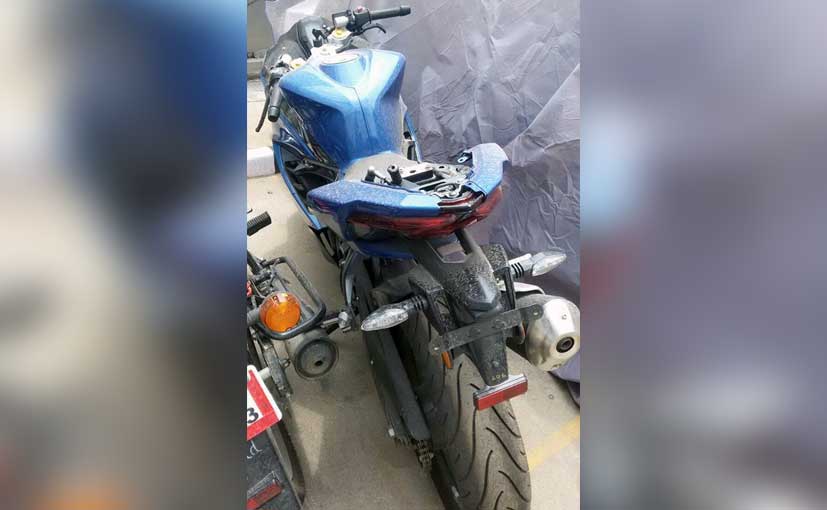
The TVS Apache RTR 310 is a much awaited offering and is all set to go on sale sometime in July 2017. With the launch just months away, TVS' first big bike has been spotted completely undisguised in new images that recently emerged online. The new TVS Apache RTR 310 will take on the likes of KTM RC 390, Kawasaki Ninja 300, Yamaha R3 and the upcoming Benelli Tornado 302R.

The TVS Apache RTR 310 started life as the Akula 310 Concept and was showcased at the 2016 Auto Expo. Garnering rave reviews from the media and enthusiasts alike, the offering is also TVS' first full-faired motorcycle developed in collaboration with the company's racing division. While the production version does not carry the carbon fibre bodywork that we loved so much on the concept, it still holds true to the lines which have been slightly toned down. What you see here are new dual headlamps, split seats, clip-on handlebars and possibly Pirelli tyres with the latter likely to be offered as standard, unlike the Apache RTR 200.

q2017 tvs apache rtr 310 spied
The Apache RTR 310 shares its powertrain with the BMW G 310 R

The TVS Apache RTR 310 will also be the first bike to be launched in India with the underpinnings of the BMW-TVS alliance, Essentially, the new Apache shares its powertrain with the upcoming BMW G 310 R. However, the BMW bike is not expected to make it to the domestic market before 2018. This will give TVS enough time to build its full faired offering in the market as a track-ready motorcycle, similar to KTM's RC series.
The TVS Apache 310 will draw power from the 313 cc single-cylinder, liquid-cooled engine, shared with the BMW G 310 R. On the BMW offering, the engine churns out 34 bhp of power at 9500 rpm and 28 Nm of peak torque at 7500 rpm, paired to a 6-speed gearbox. While the G 310 R is aimed at a calmer and more touring inclined riding experience, we could see power being concentrated near the top-end for the TVS motorcycle. However, we will only get a good idea of the how the engine has been tuned once we ride it later in the year.

tvs akula 310 concept

The TVS Akula 310 Concept looked stunning in the carbon fibre bodywork
Meanwhile, also expect to see a tall windscreen, all-digital instrument console, projector headlamps, LED indicators, USD front forks and a monoshock rear suspension setup. The bike will come with petal disc brakes at the front and rear, while ABS is likely to be offered as standard.
TVS is likely to keep the prices extremely competitive and the Apache RTR 310 could start around ₹ 1.6-1.7 lakh (ex-showroom) when it goes on sale.


Sunday, 2 April 2017

New Suzuki Swift dzire leaked undisguised


Maruti Suzuki Dzire is certainly one of the popular compact sedans in Indian market for a long time now. The car is based on the Indo-Japanese automaker’s highly successful hatchback, the Swift. While Swift is preparing to be launched in its all-new avatar only early next year, the Swift Dzire will be the first to arrive in the coming months – expected in May.
With a fresh pack of sharper design language, the Swift Dzire will be aiming to appeal for both personal as well as fleet operators through its life span. As the sub-four compact sedan segment is known for practicality and less-than-favourable good looks, the 2017 Swift Dzire could re-write a new chapter with upmarket styling obtained from its hatchback cousin along with the efficient powertrain, spaciousness and practicality.


The all-new Dzire will share several design elements and components with the upcoming Swift besides the platform from Baleno that was said to be 15 percent lighter than its hatchback guise. Recently test-mule of the upcoming Swift Dzire was spotted by the people at gaadiwaadi testing near the automaker’s Manesar plant in Haryana and here they have brought you pictures of the production model.


Maruti Suzuki has commenced production of the new generation Dzire sedan as we can exclusively reveal. The leading car maker in the country could opt to drop the Swift badge from the subcompact sedan in pursuit of rendering it a unique identity within the product lineup. The Swift and the Dzire hold huge significance for the leading car maker in the country in terms of sales.

in fact, the Swift has more customers in India than the entire global markets combined by a large amount. The Dzire took advantage of the sub-four metre category and is the first product that emerged with superlative sales numbers over the years in that particular space. Therefore, the new generation versions of both these models will be looking to carry the torch with dignity from their predecessors.


More emphasise has been put on the visual front, as the Dzire remains significantly unaltered ever since it entered the business. Standing in line with the new generation Swift hatchback that had already been revealed globally and will grace India early next year, the front fascia poses an aggressive and sleeker stance.
The headlights incorporating LED Daytime Running Lights are now sharper and will give a distinctive look compared to the outgoing model. The front bumper has larger air intake at the lower portion while the fog lamp surrounds are much more appealing and sporty. The high-end trims will have the newly designed hexagonal grille being treated with chrome amidst other design elements receiving the same touch for an upmarket appeal.
 The upcoming Maruti Dzire will have its side profile heavily influenced by Baleno with more curvy A-pillar and sloped roofline elevating its overall stature. But the rear end will largely reminds the current version with minor tweaks. As the new Dzire is based on the Baleno’s platform, expect it to have lowered kerb weight that could assist in improved handling.

Maruti Suzuki Alto Sales Cross the 1 Lakh Mark In 5 Months

The Maruti Suzuki Alto has always been one of the bestsellers from the stables of the company. Maruti Suzuki recently announced that its Al...